


Example 1
Ultrasonic Cutting Systems: Modal Interactions and System Architecture
Overview
This project investigated the dynamic behavior of high-power ultrasonic cutting systems, with a particular focus on modal interactions and nonlinear vibration phenomena observed in industrially relevant configurations.
Originally motivated by industrial cutting applications, the work aimed to understand the limitations of conventional ultrasonic system architectures and to explore alternative design strategies characterized by experimental and numerical analysis.
Motivation: Ultrasonic Cutting and Its Limitations
Ultrasonic-assisted cutting is widely used in food processing and related industries due to its ability to reduce cutting forces, improve cut quality, and enhance process efficiency.
However, when ultrasonic cutting devices are scaled beyond simple single-blade configurations, their dynamic behavior becomes increasingly complex. Industrial systems often exhibit unstable vibration regimes that cannot be explained or mitigated using linear tuning approaches alone.
Understanding these limitations was a necessary step toward improving the robustness and scalability of ultrasonic cutting systems.
Engineering Focus: Nonlinear Dynamics and Modal Interactions
The core focus of this work was the experimental and numerical characterization of:
- dense modal distributions in high-power ultrasonic tools
- nonlinear vibration behavior
- modal coupling and combination resonances
Experimental observations revealed that conventional full-wavelength (λ) ultrasonic architectures, as the one shown in Figure 1, are particularly prone to these effects, leading to unpredictable system response and reduced operational stability, as highlighted in Figure 2.
At the time, such nonlinear behaviors were not widely characterized in industrial ultrasonic cutting systems.
Design Exploration and Alternative Architectures
Based on the insights gained from experimental modal analysis and FEM simulations, alternative system architectures were explored with the objective of reducing modal density and limiting the likelihood of modal interactions.
One of the investigated solutions was a half-wavelength (½λ) ultrasonic cutting system, representing a non-conventional approach compared to standard designs. This architectural change illustrated in Figure 3 and Figure 4 was shown to reduce modal crowding and to modify the system’s dynamic response.
While nonlinear effects were not completely eliminated, the study demonstrated how informed architectural choices can influence vibration behavior and provide pathways toward more stable designs.
Numerical Modelling and Experimental Validation
The work combined:
- Finite Element Modelling (modal and harmonic analysis)
- experimental modal análisis (EMA)
- laser-based vibration measurements (LDV)
The experimental measurements showed strong agreement with numerical predictions, validating the modelling approach and confirming its suitability for the investigation of complex ultrasonic dynamics.
The quality and resolution of the experimental data enabled detailed interpretation of vibration modes and nonlinear phenomena.
Outcomes and Technical Insights
This project provided:
- a clear experimental characterization of nonlinear effects in ultrasonic cutting systems
- a validated modelling framework for analyzing modal interactions
- evidence that system-level architectural choices influence dynamic behavior
- alternative design concepts potentially relevant for industrial ultrasonic applications
The work attracted interest beyond the original application domain, including from companies operating in other ultrasonic fields, where similar nonlinear behaviors are encountered.
Key Capabilities Demonstrated
- Characterization of nonlinear ultrasonic dynamics
- FEM-driven investigation of complex vibration behavior
- System-level thinking in ultrasonic design
- High-quality experimental validation
- Translation of physical insight into design concepts
Potential Relevance for Industry
The phenomena investigated in this project remain relevant for modern power ultrasonic systems, where increasing power levels and complex geometries continue to challenge vibration stability.
The methodologies and design insights developed here are potentially transferable to industrial ultrasonic applications requiring controlled vibration behavior and robust system performance.
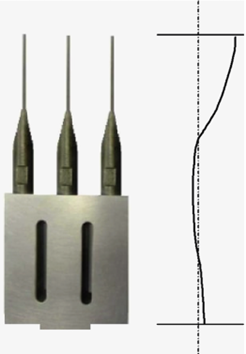
Figure 1. One-wavelength three-blade cutting head
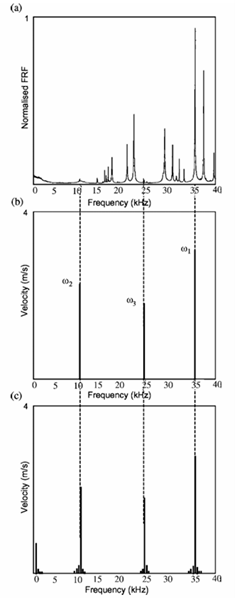
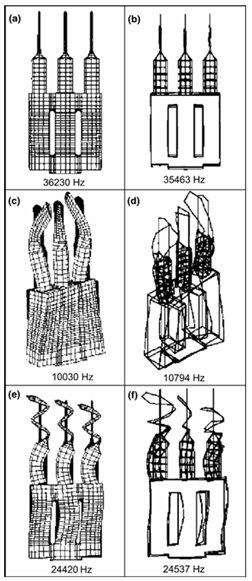
Figure 2. (a-left) Sum of the FRFs measured in the wavelength three-blade cutting head; (b-left) combination resonance; and (c-left) combination resonance with modulation.
On the right: comparison between the modal data of the tuned mode and the two internal modes by FEA (a, c, e) and EMA (b, d, f) using 3D LDV
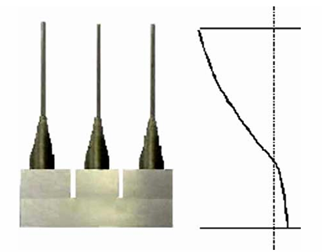
Figure 3. Half-wavelength three-blade cutting head
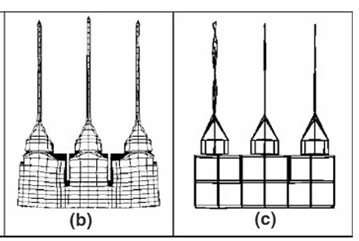
Figure 4. Predicted and measured longitudinal mode response of half-wavelength cutting head with (a) double slitted block horn (FEA) and (b) double-slitted block horn (EMA) using 3D LDV